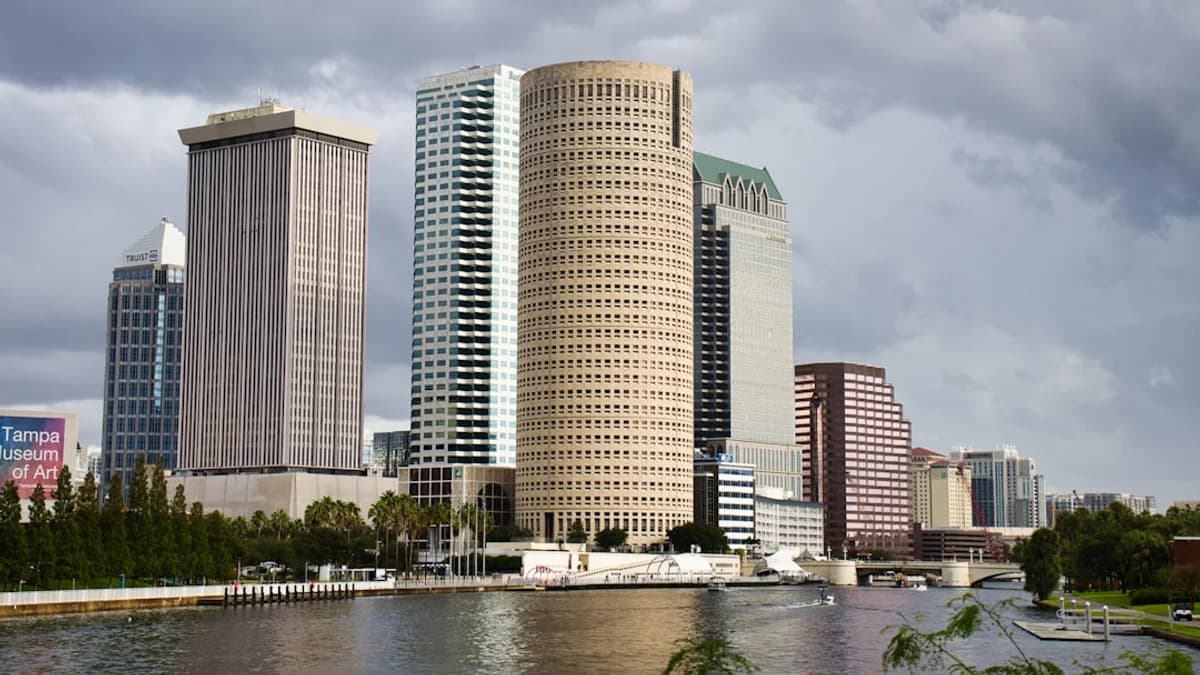
Tampa's commercial fire code environment is shaped by three structural features. First, regulatory dualism — Tampa Fire Rescue Fire Prevention Bureau covers the City of Tampa proper, while Hillsborough County Fire Marshal's Office covers unincorporated Hillsborough County and several smaller jurisdictions. Multi-property portfolios across the metro frequently cross this jurisdictional line. Second, institutional specialization — Tampa Fire Rescue operates its Inspections Divisions with explicit separation between Existing Inspections Division (periodic compliance) and New Construction Division (plan review and pre-occupancy). This separation creates clear workflows for different compliance needs. Third, Tampa's coastal industrial profile — the Port of Tampa hosts petroleum, chemical, and bulk cargo operations, healthcare facilities concentrated across the metro demand specialized Life Safety Code compliance, and lightning-strike risk combined with salt corrosion creates technical maintenance challenges unique to Gulf coast commercial properties.
Layered on this institutional structure, Tampa adds distinctive compliance provisions. Tampa Municipal Code Chapter 11, Article I, Division 2, Section 11-27 establishes that all commercial establishments — including residential structures of three or more dwelling units — are subject to periodic fire code compliance inspections. Tampa operates a unique LP (Liquefied Petroleum) gas inspection program, providing both installation and annual inspections for facilities that transport, store, or handle LP products, with installers billed monthly for inspections conducted on their projects. Tampa Fire Rescue also offers voluntary pre-inspection services — an option rarely available elsewhere — that allows commercial operators to identify and address violations before an official inspection triggers citations.
This guide covers Tampa Fire Rescue Fire Prevention Bureau structure, the Existing Inspections Division and New Construction Division workflows, Tampa Municipal Code Chapter 11 compliance, the LP gas inspection program, voluntary inspection options, Hillsborough County Fire Marshal coordination for unincorporated areas, common violations, and the hurricane-season and Gulf coast-specific technical considerations for Tampa commercial operators.
Tampa Fire Rescue
Fire Prevention Bureau Structure.
Tampa Fire Rescue's Fire Prevention Bureau is organized around a two-division inspection structure, each with distinct responsibilities and workflows.
Existing Inspections Division
The Existing Inspections Division provides periodic inspections of commercial occupancies, monitoring fire code compliance across Tampa's commercial base. The Division:
- Conducts periodic inspections of commercial occupancies — high-rise complexes, institutional complexes, children's educational centers, public assembly areas, and more
- Handles complaint response for reported fire code violations
- Prioritizes target hazards — occupancies involving potential for large loss of life or dollar loss receive priority status
- Prioritizes activities that involve handling or processing of products that may contribute to fire propagation
- Manages inspection compliance through a system of user permits
- Conducts inspections by request — from new business code compliance to generalized existing commercial building inspections
LP (Liquefied Petroleum) gas inspection program
A Tampa-specific service within Existing Inspections:
- New LP installations inspected when requested by the installation contractor
- Coverage includes tank installations, piping installations, additional appliances, rough-in piping for new commercial or residential structures
- Annual inspections of facilities that transport, store, or handle LP products
- Billing: installers billed monthly for inspections occurring on their projects during the previous month through the office's billing system
- Purpose: safety of users and handlers of LP products
This LP gas program structure — installation + annual inspections + monthly billing — is distinctive to Tampa among major Florida metros.
New Construction Division
The New Construction Division handles plan review and pre-occupancy inspection workflows for new commercial construction and major renovations.
Fire Prevention Bureau Mission
“The mission of the Fire Prevention Bureau Inspections Divisions is to continue to conduct fire prevention fire code compliance inspections in commercial occupancies within the City of Tampa. With these fire code compliance inspections, the citizens of Tampa will continue to have the opportunity to live and work in commercial structures that are safe from the perils of fire.”
This mission framing — emphasizing inspection as contribution to fire safety outcomes rather than enforcement-focused language — reflects Tampa's generally education-oriented enforcement culture.
Tampa Municipal Code Chapter 11
— the Periodic Inspection Mandate.
Tampa Municipal Code Chapter 11, Article I (Administrative Provisions), Division 2 (Certificates; Documents; Requirements), Section 11-27 establishes the foundation of Tampa's periodic fire code compliance inspection program.
Core mandate
All commercial establishments — including residential structures of three (3) or more dwelling units — are subject to periodic fire code compliance inspections. The inspections determine compliance with adopted fire codes and are conducted by Tampa Fire Rescue Fire Prevention Bureau personnel.
Practical implications
- Triplex and larger multifamily residential buildings are commercial establishments for fire code purposes in Tampa — this is broader than some Florida jurisdictions where multifamily residential starts at higher dwelling unit thresholds
- Mixed-use buildings with commercial ground floor and residential upper floors (common in Tampa's revitalizing downtown) face full commercial compliance
- Boarding houses, SRO (Single Room Occupancy) facilities, and similar fall clearly under the commercial inspection framework
- Periodic inspection language allows flexibility in frequency based on occupancy type and risk profile
Inspection frequency by occupancy type
While not specified in a single unified table, Tampa's inspection frequency generally follows:
- High-risk occupancies (hospitals, schools, assembly venues) — annual inspection
- Lower-risk businesses — every 2-3 years
- Complaint-driven or post-violation — more frequent inspections as needed
- New businesses — initial fire inspection required before Certificate of Occupancy
- Specific permit categories (alcohol service, lodging) — annual inspection regardless of risk category
Voluntary Fire Safety
Inspection Program.
Tampa offers a voluntary fire safety inspection option — a feature rarely available in major US fire departments.
How it works
Businesses can request a voluntary fire safety inspection by contacting the Tampa Fire Rescue Fire Marshal's office directly. This proactive approach allows commercial operators to:
- Identify and address potential violations before an official inspection
- Avoid citations during formal inspections
- Gain pre-occupancy compliance confidence after renovations
- Facilitate ownership transfer with documented compliance status
- Evaluate new fire safety systems before they become regulatory concerns
To schedule
- Contact Tampa Fire Rescue Fire Marshal's Office directly
- Submit request via the City of Tampa website
- Provide business information, location, and preferred inspection dates
Cost consideration
There may be a fee for voluntary inspections, but many operators find the cost justified by:
- Risk reduction during official inspections
- Actionable findings with time to correct before citations
- Opportunity to negotiate corrective timelines proactively
Strategic uses of voluntary inspection
- After substantial renovations or tenant improvements
- Before ownership transfer or lease assignment
- When implementing new fire safety systems
- Before scheduled official inspection if significant time has passed
- When business operations have changed substantially
Hillsborough County
Fire Marshal's Office.
For commercial properties in unincorporated Hillsborough County (outside Tampa, Temple Terrace, and Plant City municipal jurisdictions), the Hillsborough County Fire Marshal's Office is the applicable AHJ.
Contact
- Phone: (813) 744-5541
- Hours: Monday through Friday, 8 AM to 3 PM
- Email: firemarshal@hcfl.gov
- Mailing address: Hillsborough County Office of the Fire Marshal, P.O. Box 310398, Tampa, FL 33680
Payment options
- Online: Submit payment via Fire Marshal Payment online portal
- Mail: Make checks payable to Hillsborough County Board of County Commissioners
- Billing inquiries: Digitech Computer LLC at (813) 280-9810 (Monday-Friday 8 AM - 5 PM)
Inspection scheduling
Inspections require appointment. Call Fire Marshal's Office directly at (813) 744-5541 during business hours to schedule.
For multi-property operators
Commercial portfolios spanning City of Tampa + unincorporated Hillsborough County require:
- Separate compliance documentation for each AHJ (Tampa Fire Rescue vs HCFMO)
- Separate inspection scheduling
- Separate permit tracking
- Potentially different fee structures and payment workflows
Understanding which jurisdiction applies to each property is the first operational question. Property address lookups via Hillsborough County GIS or Tampa city parcel lookup clarify AHJ assignment.
Common Violations in
Tampa Commercial Properties.
Tampa Fire Rescue and Hillsborough County FMO most frequently cited violations reflect the city's commercial mix — port and industrial, healthcare concentration, hospitality base, and coastal construction.
1. LP gas installation inspection non-compliance — LP installations operated without required inspection, or annual facility inspections missed for transport/storage/handling operations. Tampa's LP program is stricter than many Florida jurisdictions.
2. Fire alarm system battery degradation (lightning damage) — Tampa's frequent thunderstorm activity accelerates battery degradation in alarm and emergency lighting systems. Without quarterly push-to-test verification, systems appear functional under normal power but fail during actual events.
3. Salt corrosion of fire protection equipment — sprinkler piping, alarm contacts, fire pump components exposed to Gulf coast air show corrosion faster than inland equipment. Maintenance inspection schedules for waterfront commercial properties should be more frequent than code minimums.
4. Port of Tampa hazmat permit and storage violations — petroleum, chemical, and bulk cargo operations facing heightened inspector scrutiny on hazardous materials disclosure, storage configuration, and emergency response planning.
5. Healthcare Life Safety Code documentation gaps — Tampa's extensive healthcare network (Tampa General, Moffitt Cancer Center, BayCare, AdventHealth, among others) requires NFPA 101 Life Safety Code compliance documentation enforced by IDPH — not Tampa Fire Rescue directly. Operators sometimes miss this distinction.
6. Converted commercial space occupancy classification failures — Tampa's rapid downtown revitalization has driven many warehouse-to-office and warehouse-to-mixed-use conversions. Original occupancy classification often doesn't match current use, triggering upgraded fire code requirements.
7. Emergency generator testing documentation — particularly important for healthcare, high-rise, and assembly occupancies. Documentation gaps cite consistently.
8. Assembly occupancy load posting failures — Tampa's downtown events, convention operations, and tourism-driven assembly venues frequently cite.
9. Kitchen hood suppression 6-month inspection non-compliance — Tampa's restaurant base generates consistent violations.
10. Storage clearance violations — 18-inch minimum below sprinkler deflectors. Inspectors measure.
For a comprehensive self-audit checklist, see our fire inspection checklist or download the Florida-specific version.
Coastal and Hurricane
Compliance Considerations.
Tampa's Gulf coast exposure creates distinctive compliance realities for commercial operators. While Miami faces Atlantic hurricane exposure, Tampa faces storm surge as the dominant wind-versus-water risk.
Storm surge impact on fire protection
- Sprinkler piping submersion may require inspection and potential replacement
- Fire pump and controller damage from water exposure — electrical system inspection required
- Alarm system low-voltage wiring vulnerable to water intrusion
- Fire-rated assembly degradation when water-compromised materials dry
- Emergency generator fuel systems — flood exposure concerns for diesel storage
Pre-season readiness
- Fire protection system functional testing before June 1
- Emergency power system verification
- Hurricane-season staffing plans for fire watch during storm shutdowns
- Hazardous materials inventory review — Port of Tampa operations especially
Lightning-strike preparation
Tampa experiences one of the highest lightning strike densities in the United States. Commercial fire protection systems face:
- Surge protection requirements for alarm panels and monitoring communications
- Grounding system inspection importance
- Post-strike functional testing of electronic components
Salt corrosion maintenance
Commercial properties within 3 miles of the Gulf or Tampa Bay should plan:
- Quarterly visual inspection of exposed sprinkler piping
- Bi-annual fire pump component inspection
- Alarm panel terminal cleaning on regular schedule
- More frequent replacement of electrical contacts than code minimums specify
Healthcare and Industrial
Compliance Layers.
Tampa's commercial base includes two sectors with additional compliance layers beyond standard Fire Prevention Bureau inspection.
Healthcare (IDPH Jurisdiction)
Licensed hospitals, nursing homes, assisted living facilities, and ambulatory care facilities fall under Florida Department of Public Health jurisdiction for Life Safety Code enforcement — not Tampa Fire Rescue directly. The healthcare concentration in Tampa (Tampa General Hospital, Moffitt Cancer Center, BayCare system, AdventHealth system, H. Lee Moffitt Cancer Center) creates significant compliance infrastructure.
For healthcare operators, the compliance framework is:
- IDPH — NFPA Life Safety Code (NFPA 101) enforcement
- Tampa Fire Rescue — routine fire inspections coordinating with IDPH
- State Fire Marshal — overarching compliance coordination
Port of Tampa Industrial
Port Tampa Bay hosts petroleum, chemical, and bulk cargo operations requiring specialized compliance:
- Hazardous Materials Transportation Act compliance (federal layer)
- Florida State Fire Marshal coordination on petroleum and chemical storage
- Tampa Fire Rescue inspection of land-side facilities
- US Coast Guard coordination for waterside operations
Commercial operators adjacent to port operations (not directly within port facilities) should understand how industrial-scale compliance considerations may affect neighboring properties — particularly around vapor release, fire spread risks, and emergency response access.
Tampa compliance questions, answered.
Quick answers to what commercial operators ask most about Tampa fire code compliance.
Other city guides in this state
Jacksonville
JFRD · Port + Military + Industrial