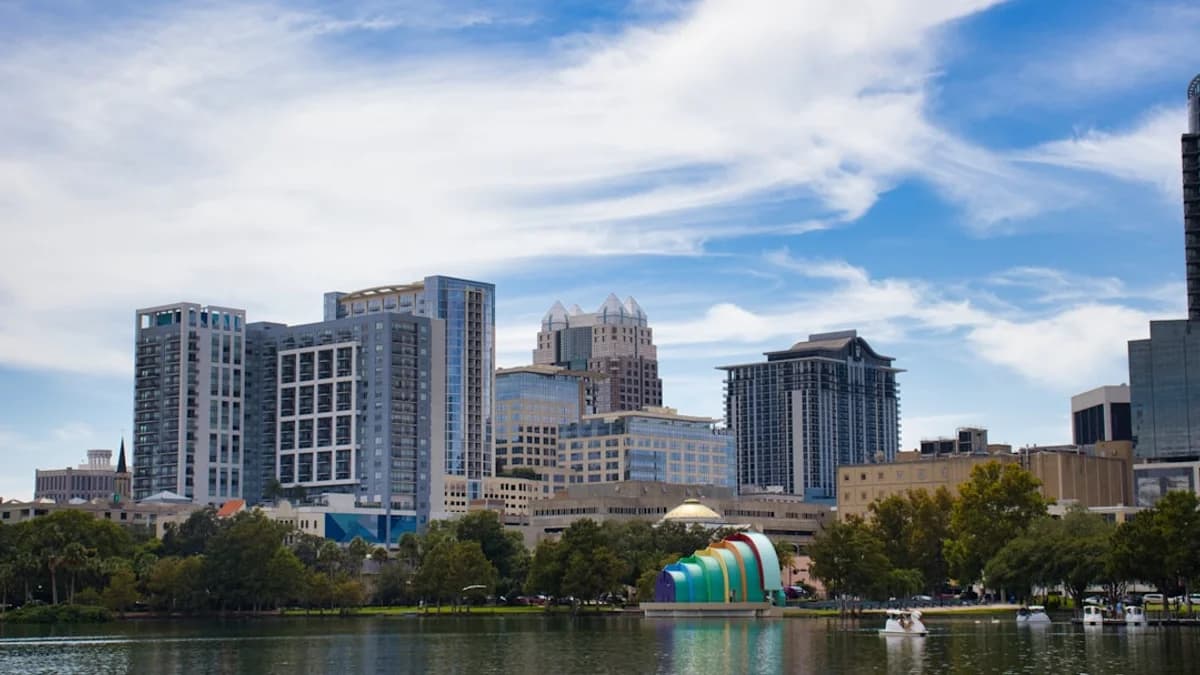
Orlando's commercial fire code environment reflects three realities that compound at a scale unmatched in the United States. First, tourism volume — the Orlando metro hosts more than 75 million visitors annually, with commercial occupancies designed for mass gathering that demand compliance frameworks other cities don't require. Second, institutional dualism — Orlando Fire Department's Fire Prevention Division covers the City of Orlando proper, but the theme park corridor, Orange County Convention Center, International Drive hospitality district, and most of the metro tourism infrastructure sit in unincorporated Orange County under Orange County Fire Rescue Department's Office of the Fire Marshal. Multi-property portfolios across the metro routinely cross this jurisdictional boundary. Third, convention-scale operations — the Orange County Convention Center is the second-largest convention facility in North America, hosting more than 200 events annually with floor plan review workflows, Trade Show permit requirements, and fire watch coordination that exist at no other US scale.
The compliance framework builds on Florida Fire Prevention Code (Florida Statutes Chapter 633) as the baseline. Orlando has adopted NFPA 1 Fire Code (Chapter 1, Section 18) and NFPA 101 Life Safety Code as the Life Safety Fire Code of the City. In May 2025, Orlando released Fire Design Guidelines that supplement the Florida Fire Prevention Code for new commercial development, redevelopment, infill development, road reconstruction, and changes to existing fire department access — adding performance-based design flexibility alongside prescriptive requirements. Separately, OCFRD enforces NFPA 101 Life Safety Code for conventions, trade shows, and exhibits, with specific Standards governing cooking permits, LP gas, pyrotechnics, cryogenic liquids, multi-level booths, fog/haze systems, and dozens of other hazardous operations typical of large-scale events.
This guide covers OFD Fire Prevention Division structure, OCFRD Office of the Fire Marshal, Chapter 24 Fire Prevention Code of Orlando, the May 2025 Fire Design Guidelines, OCCC and Trade Show permit workflows, theme park corridor compliance reality, hospitality industry considerations, and the common violations Orlando commercial operators face during inspection.
Orlando Fire Department
Fire Prevention Division.
Orlando Fire Department operates a Fire Prevention Division with civilian and uniformed inspectors conducting plan review, occupancy inspections, and code compliance enforcement under the Florida Fire Prevention Code (Florida Statutes Chapter 633), adopted by the State Fire Marshal's Office.
OFD Fire Prevention Division responsibilities
- Plan review for new construction and renovation
- Annual fire safety inspections of commercial occupancies
- Occupancy inspections before Certificate of Occupancy issuance
- Code compliance enforcement
- Special event fire code review (Orlando city property)
- Building Construction fire permits (fire suppression, fire alarms, fire sprinklers)
OFD operational note
Dispatch for OFD is handled through the Orange County 911 Communications Center, which routes calls based on incident address and jurisdictional boundary. This shared dispatch arrangement means OFD and OCFRD coordinate closely on mutual-aid response and compliance questions that cross city-county boundaries.
Critical jurisdictional boundary
OFD's Fire Prevention Bureau enforces the Florida Fire Prevention Code within city limits. Outside those limits — including most of the tourism district, theme parks, Orange County Convention Center, International Drive, and much of the hospitality corridor — Orange County Fire Rescue Department or the State Fire Marshal's regional office holds enforcement authority. Commercial operators new to Orlando frequently discover their property falls under OCFRD, not OFD, only after initial permit outreach.
Orange County Fire Rescue
Office of the Fire Marshal.
For unincorporated Orange County — which includes most of the Orlando tourism and hospitality infrastructure — the OCFRD Office of the Fire Marshal is the applicable AHJ.
Contact
- Address: 7079 University Blvd., Winter Park, FL 32792
- Phone: (407) 836-0004
- Permits only (fire-specific)
For other Orange County permits (building, zoning, etc.)
- Permitting Services & Division of Building Safety: Orange County Administration Building, 1st Floor, 201 Rosalind Avenue, Orlando, FL 32801, (407) 836-5550, PermittingServices@ocfl.net
- Zoning Division: Same address, (407) 836-3111, Zoning@ocfl.net
OCFRD jurisdictional scope
- Unincorporated Orange County
- Orange County Convention Center operations
- Large portions of International Drive
- Theme park corridor (coordinated with park-specific fire protection agreements)
- Hospitality properties outside city limits
- Major commercial corridors in unincorporated areas
OCFRD Standard for Conventions, Trade Shows, and Exhibits
OCFRD publishes a detailed Standard governing large-scale event compliance. Key provisions include:
- NFPA 101 Life Safety Code as the framework baseline, adopted by Florida Administrative Law and State Fire Marshal's Rules and Regulations
- Seating requirements: seating for general sessions accommodating more than 200 persons must be fastened together in groups of not less than three and not more than seven
- Exit signage: battery backup or equivalent required for exit and exit directional signage
- Portable fire extinguishers: currently inspected and tagged by licensed fire contractor
- NFPA 701 Textile flame tests: flame propagation of textiles and films — mandatory standard for scenery, decorations, and display materials
- Cooking Permits: prior approval from Fire Marshal required for cooking appliances requiring automatic suppression and/or flue (Standard Section 7.4.5)
- LP gas limits: nominal 5 lb LP containers permitted only when installed by trained staff with prior Fire Marshal approval; nominal 10 oz butane containers limited to two with prior approval; 20-foot separation required between LP cylinders
- Cryogenic liquids: tanks larger than 10 gallons not permitted; tanks must be secured
- Multi-level booths: signed and sealed engineer drawings with stair elevations; fire watch required
- Fog/Haze machines: fire watch required when Fire Alarm System is altered (placed in test/bypass or zone turned off)
- Laser Safety Officer: required for any laser display; notification to Florida Department of Health State Bureau of Radiation required for out-of-state lasers
Chapter 24 —
Orlando Fire Prevention Code.
Orlando's Code of Ordinances includes Chapter 24 Fire Prevention Code, adopted by the Orlando City Council to implement Florida Fire Prevention Code and specific state amendments including Administration Code Rule 69A-60.
Code adoption structure
“The City of Orlando City Council adopted the State of Florida, amended Florida Fire Prevention Code and Administration Code Rule 69A-60 as the Life Safety Fire Code of the City of Orlando. The Florida Fire Prevention Code inclusive of NFPA 1, Fire Code, Chapter 1, section 18 and NFPA 101, Life Safety Code which provide prescriptive requirements...”
This adoption framework means commercial operators in the City of Orlando must comply with:
- Florida Fire Prevention Code (state baseline)
- Administration Code Rule 69A-60 (state regulations)
- Orlando Chapter 24 local amendments
- NFPA 1 Fire Code requirements
- NFPA 101 Life Safety Code requirements
May 2025 Orlando
Fire Design Guidelines.
In May 2025, the City of Orlando released Fire Design Guidelines — a supplement to the Florida Fire Prevention Code applying to all new community and commercial development, redevelopment, infill development, road reconstruction, and any changes to existing fire department access.
Guidelines scope
The Guidelines reference NFPA 1 Chapters 16 and 18 plus NFPA 1142 for fire department access requirements, adopted and amended by the City of Orlando.
Performance-based design provisions
A distinctive feature of the May 2025 Guidelines is explicit allowance for performance-based design — alternatives that meet the intent of prescriptive fire department apparatus access requirements while accommodating other interests including pedestrian and bicycle safety, environmental protection, and stormwater management.
Key design elements
- All-weather surface requirements — fire lanes, public and private access roads, alleyway, parking lot lanes, paved shoulders, and buffers designed as load bearing with non-permeable materials (concrete, etc.)
- Operational bays — locations designated for fire apparatus to operate while stationary; can be comprised of bike lanes, load-bearing medians, alternative load-bearing surfaces as reviewed
- Performance-based alternatives — on streets lined by single-family houses, duplexes, townhouses with windowsills no greater than 27 feet from grade, specific performance-based alternatives may provide sufficient fire department access
- Hydrant spacing — fire hydrants located at operational bays where possible, with overall spacing no more than 500 feet
Collaborative development
The Guidelines were developed in collaboration with Orlando Fire Department, Public Works, and other city departments — reflecting an effort to integrate fire safety with urban design goals rather than treating them as competing priorities.
For commercial operators
New commercial development or renovation in the City of Orlando now has both prescriptive and performance-based compliance pathways available under these Guidelines. Complex projects with unusual constraints can pursue performance-based alternatives through collaboration with OFD during plan review.
Orange County Convention Center
Compliance Workflow.
The Orange County Convention Center is the second-largest convention facility in North America. Compliance workflow for events hosted at OCCC is distinctive in its lead-time and permit requirements.
Floor plan submission timeline
- 6 months prior to event: floor plans including general session, registration, and pre-function space must be submitted to OCCC Event Management for approval by OCFR Department
- 21 days prior minimum: trade show permit applications must be submitted to OCFRD or additional Expedited Plans Review fees apply
- Approved plans returned to submitting agency or person before event
- Major modifications after plan approval require resubmission with new permit application
Trade Show Permit Application
- Standard fee: $84.00 (payable to Orange County Board of County Commissioners)
- Submit through Mobile Eyes Contractor Permit Portal (online application + payment)
- Select “Orange County Fire Rescue” in City/Dept drop-down; search for event address
- Account Executive should be on-site contact — provide cell phone for inspection coordination
- After-hours inspection fee if show start time is outside normal business hours (7:00 AM - 4:00 PM)
- No additional fees required for corrections or revisions
Show Management and Decorator responsibilities
Under OCFRD Standards, Show Management and Decorator are required to construct, operate, and maintain the event in compliance with:
- Fire Rescue Department approved plans
- Notification to Florida State Bureau of Radiation (for any radiation devices)
- Pyrotechnics, fireworks, or special effects permit applications (separate from base trade show permit)
- Vehicle and boat displays over 100 sq ft requiring additional compliance
- All exhibits, scenery, and decorations must be non-combustible or flame retardant per NFPA 701
Specific hazardous operation provisions
Under OCFRD Standards Section 8.6.11, introduction of any other hazardous operation into the building beyond standard event activities requires Fire Marshal prior approval. This catch-all provision means commercial event producers should proactively identify any unusual operations and secure approval in advance rather than discovering non-compliance during setup.
Theme Park Corridor
Compliance Reality.
The Orlando theme park corridor — Walt Disney World Resort, Universal Orlando Resort, SeaWorld Orlando, and adjacent commercial operations — represents a unique compliance environment.
Practical compliance framework
- Disney and Universal major operations: Operate under specialized fire protection agreements with OCFRD, often involving park-embedded fire protection engineering teams, dedicated on-property fire response, and compliance coordination that exceeds standard commercial occupancy requirements
- Theme park-adjacent commercial properties: Hotels, retail, restaurants, entertainment venues outside park boundaries follow standard OCFRD compliance — but with heightened expectations given the tourism density
- Special events in theme park context: Marathon runs, charity events, film shoots, and similar activities that traverse park boundaries require coordinated permit planning across OCFRD and park authorities
Hospitality corridor compliance
The International Drive and Lake Buena Vista hospitality corridor contains one of the densest hotel concentrations in the United States. Commercial compliance focus includes:
- Fire alarm and sprinkler system documentation during peak-season inspections
- Temporary event fire code compliance — weddings, conferences, pop-up installations
- Kitchen hood suppression in high-volume hotel and convention food service (NFPA 96, 6-month inspection cycle)
- Assembly occupancy exit capacity during special events and peak gatherings
- Emergency evacuation planning for international visitors with limited local language familiarity
- Two-way radio communication enhancement for high-rise hotels (Florida Building Code Section 510 compliance)
Common Violations in
Orlando Commercial Properties.
OFD and OCFRD most frequently cited violations reflect the city's unique tourism-driven commercial base.
1. Trade Show Permit submission deadline failures — floor plans submitted within 21 days of first contracted move-in day trigger Expedited Plans Review fees; plans not submitted at all result in permit denial and event disruption.
2. NFPA 701 textile flame test documentation gaps — scenery, decorations, display materials at conventions and events without current flame test documentation. OCFRD inspectors actively verify.
3. Cooking Permit non-compliance — cooking appliances at events, pop-ups, and temporary operations without prior Fire Marshal approval for automatic suppression and/or flue requirements.
4. Hotel fire alarm and sprinkler documentation gaps — the Orlando hospitality base generates consistent violations during peak-season inspections. Documentation kept at vendor offices rather than on-site fails inspection.
5. Assembly occupancy load posting failures — particularly common in tourist-oriented restaurants, nightclubs, event venues, and convention hall operations.
6. Temporary event fire code violations — weddings, conferences, pop-up installations at hotels and venues without proper OFD/OCFRD fire code review. Show managers and event planners often underestimate the lead time for permit approval.
7. Multi-level booth non-compliance at OCCC — trade show exhibits with multi-level booths without signed and sealed engineer drawings, stair elevations, or required fire watch coverage.
8. Kitchen hood suppression 6-month inspection failures — Orlando's massive restaurant and hotel food service base generates consistent NFPA 96 violations.
9. Emergency lighting and exit sign battery failures — Florida heat and humidity accelerate battery degradation. Without push-to-test verification, silent failures go undetected until emergencies.
10. Florida Building Code Section 510 compliance gaps — high-rise hotels not yet compliant with emergency responder radio coverage system requirements. 2026-2027 phased deadlines approaching.
For a comprehensive self-audit checklist, see our fire inspection checklist or download the Florida-specific version.
How to Engage —
OFD vs OCFRD Workflow.
For commercial operators new to Orlando, identifying the correct AHJ for your property is the first compliance question.
Property in City of Orlando
- AHJ: Orlando Fire Department Fire Prevention Division
- Permits: City of Orlando building permit department (fire suppression, fire alarms, fire sprinklers)
- Plan review: OFD Fire Prevention Division
- Special events on city property: City of Orlando special event permit process
Property in Unincorporated Orange County
- AHJ: OCFRD Office of the Fire Marshal, 7079 University Blvd., Winter Park, FL 32792, (407) 836-0004
- Permits: Mobile Eyes Contractor Permit Portal for trade shows/conventions; standard OCFRD permit application for other commercial fire work
- Plan review: OCFRD Office of the Fire Marshal
- Building permits (non-fire): Orange County Permitting Services at 201 Rosalind Avenue, (407) 836-5550
Property in other Orange County municipalities
Winter Park, Maitland, Apopka, Ocoee, and other Orange County cities operate their own fire departments with independent compliance workflows. Verify the specific AHJ based on property address.
Multi-property operators
Commercial portfolios across the Orlando metro typically cross OFD and OCFRD boundaries. Separate compliance documentation, separate inspection scheduling, and potentially different permit fee structures apply. Operators should maintain clear records of which AHJ governs each property.
Orlando compliance questions, answered.
Quick answers to what commercial operators ask most about Orlando fire code compliance.
Other city guides in this state
Jacksonville
JFRD · Port + Military + Industrial