
Every commercial property in the United States is subject to fire inspection requirements — but what those requirements actually are depends on your state, your city, the type of building you operate, and which edition of the fire code your jurisdiction has adopted. Getting this wrong is expensive: fines typically range from a few hundred to tens of thousands of dollars, insurance premiums can spike, and in worst cases an AHJ can shut down your operation until violations are corrected.
This guide explains what U.S. fire inspection requirements generally look like in 2026: who enforces them, how often they happen, what inspectors actually check, and how to prepare.
What Is a Fire Inspection?
A fire inspection is a systematic review of a building and its operations to verify compliance with the adopted fire code — most commonly the International Fire Code (IFC) published by the International Code Council (ICC), or NFPA 1 (Fire Code) published by the National Fire Protection Association. Inspections are conducted by:
- Municipal or county fire marshals (most common for routine inspections)
- State fire marshal offices (for state-owned buildings and certain occupancy types)
- Third-party inspection contractors (for system-specific tests like sprinklers and alarms)
- Insurance carrier inspectors (not a regulatory inspection, but often required by policy)
A fire inspection is not the same as a fire plan review (which happens before construction) or a fire investigation (which happens after an incident). This guide focuses on operational, periodic inspections of existing buildings.

Who Is Required to Have a Fire Inspection?
Nearly every non-residential building is subject to some form of fire inspection requirement. The most heavily regulated occupancies under the IFC and NFPA 1 include:
- Assembly occupancies — restaurants, theaters, places of worship, nightclubs, conference centers
- Educational occupancies — K-12 schools, daycares, universities
- Healthcare occupancies — hospitals, nursing homes, ambulatory surgery centers
- Institutional occupancies — correctional facilities, detention centers
- High-hazard occupancies — chemical storage, flammable liquids, explosive manufacturing
- Mercantile occupancies — retail stores, shopping centers
- Business occupancies — offices, professional services
- Residential occupancies with 3+ units — apartments, hotels, dormitories
- Storage and industrial occupancies — warehouses, manufacturing, logistics
Single-family homes are generally exempt from operational fire inspections, though they must comply with building code fire safety provisions at the time of construction.
How Often Are Fire Inspections Required?
Inspection frequency is driven by occupancy type and local AHJ policy. The following are typical frequencies under NFPA and IFC guidance — your jurisdiction may require more.
| Occupancy Type | Typical Frequency |
|---|---|
| Hospitals, nursing homes | Annually (often semi-annually) |
| K-12 schools, daycares | Annually |
| High-rise buildings | Annually |
| Restaurants, bars, nightclubs | Annually (sometimes semi-annually) |
| Hotels, motels | Annually |
| Apartment buildings (3+ units) | Every 1-3 years |
| Offices, retail | Every 1-3 years |
| Warehouses, industrial | Annually to every 3 years |
| High-hazard occupancies | Annually or more frequently |
Separately, fire protection systems have their own testing and inspection schedules set by NFPA standards, typically:
- Fire sprinkler systems: quarterly, annual, and 5-year inspections per NFPA 25
- Fire alarm systems: annual inspection and testing per NFPA 72
- Portable fire extinguishers: monthly visual checks, annual maintenance, 6-year internal, 12-year hydrostatic test per NFPA 10
- Commercial kitchen hood suppression systems: every 6 months per NFPA 96
- Emergency and standby power systems: monthly and annually per NFPA 110
What Do Fire Inspectors Actually Check?
A routine fire inspection covers both building conditions and operational practices. The exact checklist varies, but inspectors almost always review:
Means of egress
- Exit doors unlocked and unobstructed
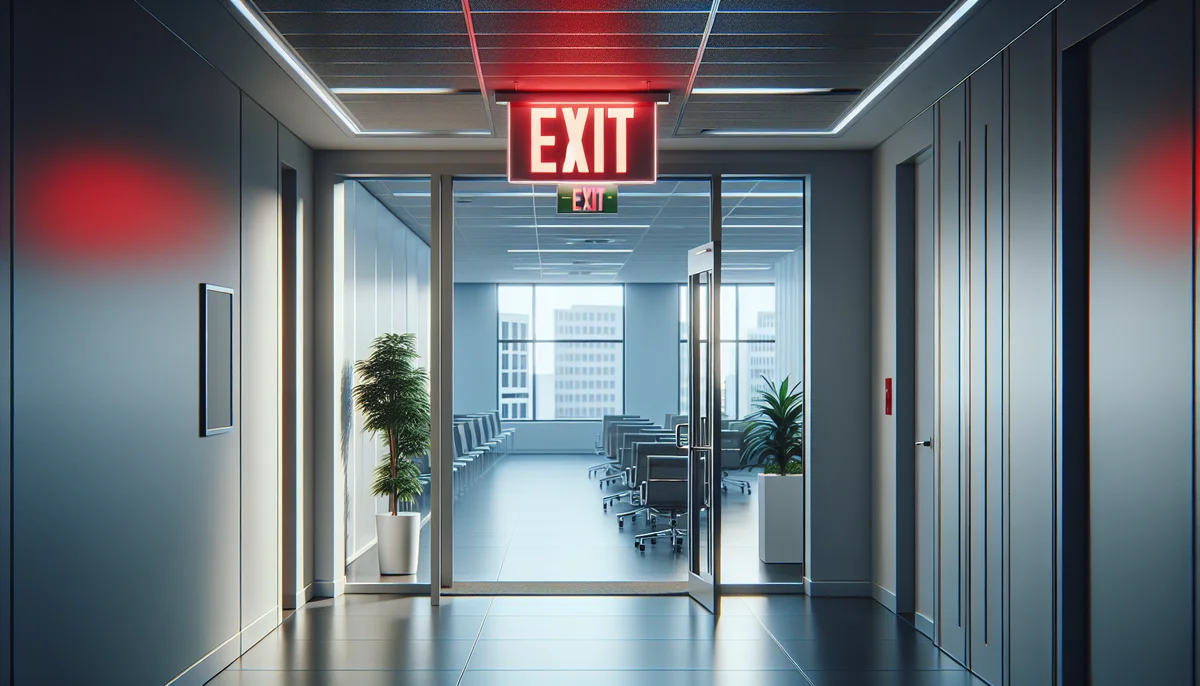
- Exit signs illuminated and visible
- Emergency lighting functional
- Corridors and stairwells clear of storage
- Occupant load posted in assembly occupancies
- Panic hardware on required doors
Fire protection systems
- Sprinkler systems inspected and tagged current
- Fire alarm system functional with current inspection tag
- Fire extinguishers charged, tagged, and accessible (travel distance typically 75 ft max)
- Standpipes and fire department connections accessible
- Kitchen suppression systems serviced
Fire-rated construction
- Fire doors close and latch properly
- Penetrations in rated walls properly sealed (firestopping)
- Fire dampers accessible and operational
Electrical and hazards
- No improper use of extension cords or power strips
- Electrical panels with 36-inch clearance
- Proper storage of flammable and combustible liquids
- Hot work permits for welding/cutting
- Proper handling of compressed gas cylinders
Housekeeping and storage
- Combustible storage not exceeding limits (typically 18 inches below sprinkler heads)
- Aisles maintained in storage areas
- Trash and recycling managed properly
- Smoking policies enforced
Documentation
- Current system inspection tags on all fire protection equipment
- Fire drill records (for schools and healthcare)
- Fire safety and evacuation plan
- Hot work permits if applicable
- Assembly occupancy permits if applicable
For a printable version, see our Fire Inspection Checklist pillar page.
Common Fire Code Violations Found in Inspections
The most frequently cited violations across U.S. jurisdictions tend to be preventable housekeeping and documentation issues rather than major structural problems:
- Blocked or locked exits
- Missing, expired, or uncharged fire extinguishers
- Fire sprinkler heads painted, blocked, or with storage too close
- Missing or expired fire alarm inspection tags
- Extension cords used as permanent wiring
- Electrical panels blocked
- Exit signs not illuminated
- Emergency lights that fail the 90-minute battery test
- Missing hot work permits
- Missing or outdated fire safety and evacuation plans
See our full breakdown in Fire Code Violations: What They Are and How to Fix Them.
What Happens If You Fail a Fire Inspection?
Outcomes depend on the severity of the violation and local AHJ policy:
- Notice of violation with re-inspection date — the most common outcome for minor issues. You're given a correction period (often 7-30 days) to fix and request re-inspection.
- Administrative fines — vary widely. Typical ranges are $100-$1,000 per violation per day, with higher penalties for repeat offenders or life-safety violations.
- Re-inspection fees — many cities charge $100-$500 per re-inspection visit.
- Cease and desist / operational shutdown — reserved for imminent hazards. The AHJ can legally order occupants out until the hazard is corrected.
- Criminal charges — rare, but possible for willful violations that endanger life.
Beyond regulatory penalties, failed inspections often trigger insurance consequences: premium increases, policy non-renewal, or claim denials if a fire occurs while you were out of compliance.
How to Prepare for a Fire Inspection
Before the inspection
- Pull all system inspection tags and verify they're current (sprinklers, alarm, extinguishers, kitchen suppression)
- Walk your exits as if you were evacuating — nothing blocking, nothing locked
- Check emergency lights and exit signs (90-minute test for emergency lighting)
- Clear electrical panels and maintain 36-inch clearance
- Remove storage within 18 inches of sprinkler heads
- Print your fire safety and evacuation plan
- Gather hot work permits if applicable
During the inspection
- Assign a knowledgeable staff member to walk with the inspector
- Take notes on everything the inspector comments on, even informally
- Ask for the specific code section cited for any violation
- Be cooperative — inspectors have broad discretion
After the inspection
- Request the inspection report in writing
- Correct violations within the stated timeframe
- Document corrections with photos and receipts
- Schedule re-inspection promptly if required

State-by-State Fire Inspection Requirements
Fire code adoption and inspection practices vary significantly by state. We maintain detailed guides for the following states:
More state guides coming soon. If you don't see your state listed, contact your local fire marshal's office for specific requirements.