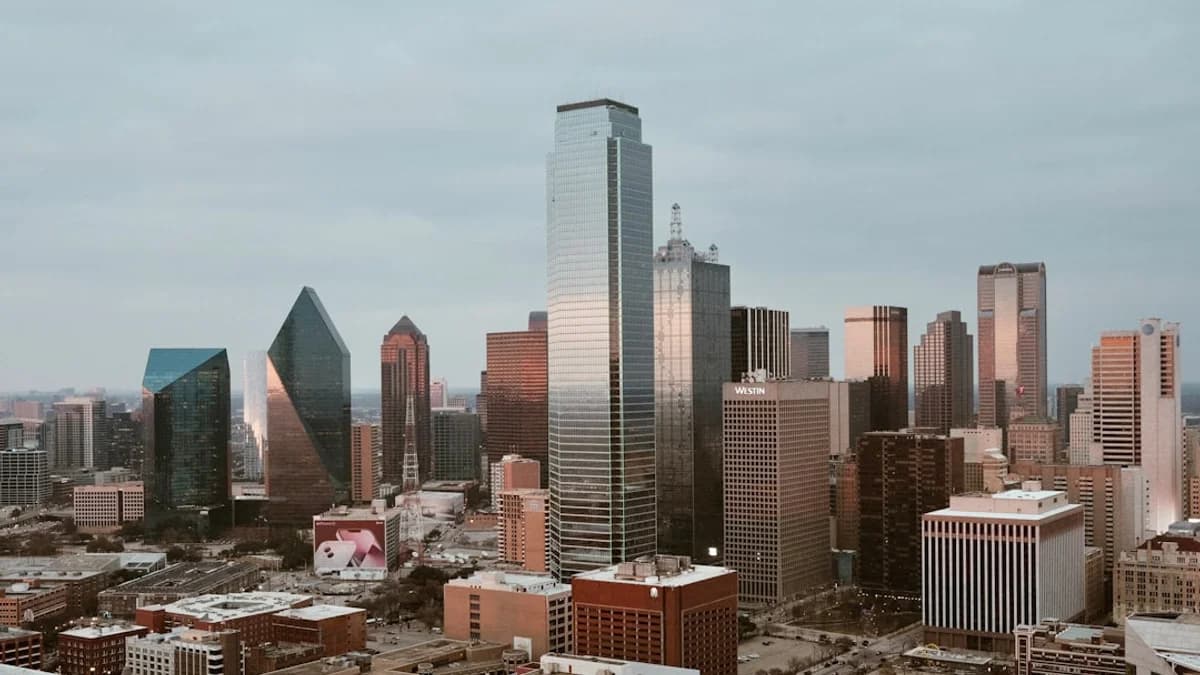
Dallas’s commercial fire code environment reflects the regulatory complexity of the DFW metroplex — the largest fragmented fire code jurisdiction cluster in Texas. Dallas Fire-Rescue’s Fire Inspection Division enforces the Dallas Fire Code (adopting the 2021 International Fire Code with local amendments most recently updated in Ordinance 33099, effective May 23, 2025) across the city’s commercial base. Fort Worth, Plano, Arlington, Irving, and Garland each run their own AHJs with distinct amendments. For commercial operators with multi-property portfolios across DFW, navigating this fragmentation is a daily reality.
Beyond the fragmentation, Dallas operates a specialized compliance infrastructure that most cities don’t. A dedicated Fire Protection Team reviews fire protection systems for compliance with the applicable codes and standards the City of Dallas has adopted — this team sits within Development Services alongside Building Inspection. A Q-Team expedited plan review process enables collaborative in-person reviews between the construction team and city reviewers, with same-day permit issuance possible for time-sensitive projects. Oak Cliff Municipal Center offers in-person permit filing alongside the online portal at Dallas Development Services.
This guide covers Dallas Fire-Rescue enforcement structure, the 2021 Dallas Fire Code (as amended May 2025), the Q-Team expedited review process, permit and inspection workflows, common violations — including a recent high-profile case where the City’s own permit office building was closed after 39 fire code violations were found — the SFMO Alarm Certificate of Registration requirement, and Dallas County FMO coordination for properties outside city limits.
Dallas Fire-Rescue
Department Structure.
The Dallas Fire-Rescue Department administers commercial fire code compliance through the Fire Inspection Division and the Fire Prevention Division. Knowing which division handles what clarifies the compliance workflow.
Fire Inspection Division
The Fire Inspection Division conducts annual fire inspections of most Dallas businesses, with higher frequencies for high-risk occupancies. Key responsibilities include:
- Annual inspections of commercial properties (hotels, motels, apartments, restaurants, retail, assembly occupancies, healthcare, and more)
- Certificate of Occupancy (CO) support — new businesses must pass fire safety inspections before receiving their CO
- Special permit issuance — hazardous materials, public assemblies, food trucks, and other regulated operations
- Violation tracking and enforcement escalation
Fire Prevention Division
The Fire Prevention Division handles code interpretation, amendment development, public education, and coordination with Dallas Development Services on new construction plan review.
Fire Protection Team (Development Services)
Within Development Services, the Fire Protection Team specifically reviews fire protection systems (alarms, sprinklers, suppression systems) for compliance with Dallas-adopted codes and standards. This team coordinates with the Fire Inspection Division on new construction, major renovations, and system modifications.
For commercial operators: your interaction depends on your activity — Fire Inspection Division for ongoing compliance, Fire Protection Team for new systems or upgrades, and Fire Prevention Division for code interpretation questions.
The Dallas Fire Code —
2021 IFC with May 2025 Amendments.
Dallas adopted the 2021 International Fire Code as the base framework, with local amendments codified through city ordinance. The most recent major update is Ordinance 33099, effective May 23, 2025, which amended Dallas Construction Codes including fire provisions.
Key characteristics of the Dallas Fire Code
- Base code: 2021 International Fire Code
- Local amendments: Dallas-specific provisions layered on top, addressing city construction patterns and enforcement history
- Permit requirements: Issued permits must be kept on premises and readily available for inspection
- Fire Code Official authority: Dallas Fire-Rescue's appointed Fire Code Official has police officer powers for enforcing the code, including issuing notices of violation, requiring corrections, and pursuing legal enforcement
- Records retention: 5 years minimum for all official records, or as long as the structure or activity exists
Permit revocation authority
Dallas Fire Code grants the Fire Code Official authority to revoke a permit where there has been false statement or misrepresentation in the application or construction documents. This is a strong enforcement tool — permit revocation can halt construction or business operations.
Interpretation and policy authority
The Fire Code Official is authorized to render interpretations and adopt policies, procedures, rules, and regulations to clarify code application. Commercial operators encountering ambiguity should reach out to the Fire Prevention Division for formal interpretation rather than guessing.
The Q-Team
Expedited Plan Review Process.
Dallas offers a distinctive Q-Team expedited plan review service that few Texas cities match — collaborative in-person review sessions between the construction team and city reviewers that can dramatically compress permit timelines.
How Q-Team works
- Session format: In-person meeting with developer/contractor team, Dallas plan reviewers, and construction documents
- Same-day resolution: For well-prepared projects, permit issuance can occur the same day as the Q-Team session
- Collaborative problem-solving: Code issues identified during the session are discussed and resolved live, rather than through iterative paper review cycles
- Ideal projects: Time-sensitive commercial construction, complex projects requiring multiple department coordination, projects with code interpretation questions that benefit from real-time discussion
Q-Team fee structure
- Application fees: $250 for projects under 25,000 sq ft / $750 for projects exceeding 50,000 sq ft
- Hourly review fee: $1,000 per hour of Q-Team session time
Trade-off consideration: Q-Team fees are substantially higher than standard plan review, but the compressed timeline can save weeks or months for commercial projects. Operators with time-pressure business cases frequently find Q-Team cost-effective.
For Q-Team scheduling: contact Dallas Development Services Department through the online portal or in-person at Oak Cliff Municipal Center.
SFMO Alarm Certificate
of Registration.
Under Texas Insurance Code Chapter 6002, any company that plans, certifies, sells, installs, services, monitors, or maintains fire alarm systems in Texas must hold an Alarm Certificate of Registration (ACR) issued by the Texas State Fire Marshal's Office. This is not optional — it is a legal requirement.
For Dallas commercial operators
- Building owner liability: If you engage an unlicensed fire alarm contractor, you — as the property owner — receive the citation, not just the contractor
- Verification responsibility: Always request and verify the ACR number before engaging any fire alarm service
- Online verification: SFMO maintains an online license search at Texas Department of Insurance
- Individual technicians: In addition to company-level ACR, individual technicians must hold current SFMO licenses for the specific work they perform (installation, monitoring, etc.)
Ongoing owner responsibility
The 2022 edition of NFPA 72 (broadly adopted in Texas in 2024) introduced a requirement that installing contractors must provide building owners with software security access to all fire alarm system components. Contractors cannot withhold system access credentials to prevent an owner from switching service providers. If your current contractor refuses to provide software access, they are in violation of NFPA 72 — document the refusal and raise the issue with SFMO.
Cybersecurity expansion
The 2025 edition of NFPA 72 expanded Chapter 11 requirements for protecting connected fire alarm systems from cyber threats. Dallas, Houston, and Austin have all incorporated cybersecurity considerations. IP-connected alarm panels should confirm system and monitoring configuration meets updated requirements.
Common Violations in
Dallas Commercial Properties.
Dallas Fire-Rescue's most-cited violations reflect the city's mixed commercial base — high-rise office towers, mid-rise hospitality, suburban retail, warehouse distribution, and industrial operations.
1. Fire alarm technician without valid SFMO ACR — building owner cited for contractor's licensing violation. Most common single violation type in DFW metroplex due to high contractor volume.
2. Documentation gaps during inspection — Dallas Fire-Rescue inspectors request ITM records on-site. Records maintained only in vendor offices fail inspection regardless of actual system compliance.
3. Storage clearance violations — particularly common in warehouses and retail backrooms. 18-inch minimum clearance below sprinkler deflectors. Inspectors measure.
4. Fire door propping — fire-rated doors held open with wedges, magnets, or tape. Dallas enforcement is aggressive on this given fire-spread investigation findings.
5. Fire alarm system failures during inspection — the April 2024 incident at 7800 North Stemmons Freeway is the most visible recent example. The City's own permit office building was closed after 39 fire code violations were found, including a fire alarm that sounded on the second floor but was inaudible on floors 3-11. This case demonstrates that Dallas Fire Inspection Division enforces uniformly, including on city-owned facilities.
6. Blocked or locked exits — restaurants during high-volume operations, retail during peak seasons. Imminent hazard classification.
7. Hot work without permits — welding, cutting, brazing during construction without required permits. Dallas requires permits kept on-premises during hot work operations.
8. Software access withholding by fire alarm contractors — building owners engaging contractors who refuse to provide system access credentials. NFPA 72 (2022) requires contractors to provide owners with software security access; refusal is a code violation.
For a comprehensive self-audit checklist, see our fire inspection checklist or download the Texas-specific version.
Dallas County FMO —
Properties Outside City Limits.
For commercial properties in unincorporated Dallas County (outside Dallas, Irving, Grand Prairie, and other municipal jurisdictions), the Dallas County Fire Marshal's Office operates under the Department of Unincorporated Area Services (DUAS).
DUAS Permit Review Process:
Coordinates between:
- Dallas County Fire Marshal's Office
- Health and Human Services
- Road and Bridge Districts
- Public Works
For commercial operators with properties straddling jurisdictional lines, this coordination is essential — a single construction project can require parallel permits from Dallas (city) and Dallas County if the property crosses incorporated boundaries, or can move between jurisdictions if unincorporated property is later annexed.
Contact: Dallas County Department of Unincorporated Area Services, www.dallascounty.org/departments/duas
For commercial operators managing multi-site portfolios across DFW — which is common given the region's development patterns — maintaining separate compliance documentation for each applicable AHJ is required:
- Dallas Fire-Rescue (City of Dallas)
- Dallas County FMO (unincorporated county)
- Neighboring cities: Fort Worth Fire Department, Plano Fire-Rescue, Arlington Fire Department, Irving Fire Department, Garland Fire Department, and others
Certificate of Occupancy
and New Business Setup.
For commercial operators opening new locations in Dallas, the Certificate of Occupancy (CO) process integrates fire safety compliance as a required pre-issuance step.
CO workflow for new commercial occupants:
- Building permit through Dallas Development Services (online portal or Oak Cliff Municipal Center)
- Plan review — including Fire Protection Team review of any fire system components
- Construction per approved plans
- Field inspections during construction (Dallas Fire-Rescue inspectors verify fire protection systems are properly installed and functional — particular attention to fire alarm control panels, sprinkler head coverage, and emergency lighting)
- Final occupancy inspection — comprehensive examination for compliance with all applicable codes, including verification that all previous inspection issues have been addressed
- Certificate of Occupancy issuance — only after final fire inspection clearance
Pre-CO best practice: Conduct your own pre-inspection walkthrough to identify and correct outstanding items before requesting the CO final inspection. This can prevent costly delays that occur when violations are identified at the final stage.
Dallas compliance questions, answered.
Quick answers to what commercial operators ask most about Dallas fire code compliance.
Other city guides in this state
San Antonio
SAFD · Assembly + Tourism Focus